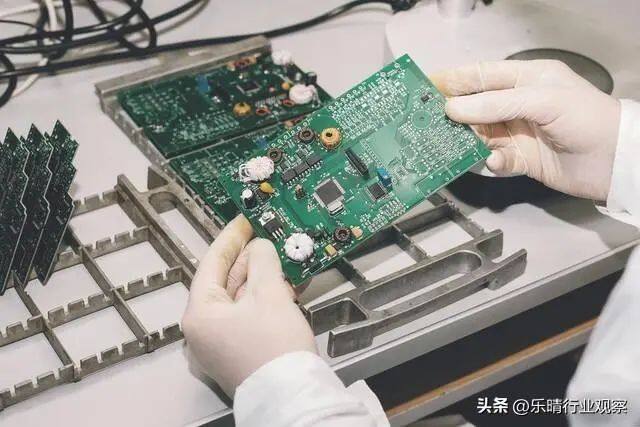
The global PCB industry is experiencing increasingly severe supply constraints.
According to industry sources, delivery times for recent PCB orders placed by some Chinese manufacturers have been pushed back to 2028. Meanwhile, India's PCB sector is facing severe raw material supply disruptions. The Electronics Manufacturers Association of India recently warned that if supply constraints persist, production in multiple electronics manufacturing segments could drop by 30% to 40% over the next three months.
This means that, following key AI infrastructure components like HBM, advanced packaging, and optical modules, PCBs are now emerging as a critical bottleneck in the AI supply chain.
More notably, the current PCB supply shortage stems not just from rising demand, but from the surge in AI server demand combined with constrained upstream material supplies.
AI servers are consuming an increasing amount of PCBs
In the past, PCBs were not the most critical segment of the electronics supply chain. However, the emergence of AI servers is changing this dynamic.
Compared to standard servers, AI servers require PCBs with higher quantities, more layers, and superior performance. Specifically, around key components such as GPUs, CPUs, HBM, networking, power management, and high-speed interconnects, PCB usage has increased significantly. Additionally, demands on materials, layer counts, trace widths, spacing, and high-speed signal transmission capabilities have become increasingly stringent.
Industry insiders note that a single AI server rack can involve tens of thousands of PCBs. As AI data centers scale from individual racks to large-scale clusters with thousands or tens of thousands of accelerators, demand for PCBs is surging.
Reuters reported this 4 that global PCB prices have been rising since the second half of 2025, driven largely by surging demand for AI servers. Starting in 2026, as manufacturers began bulk purchasing raw materials, supply constraints worsened, with PCB prices in 4 jumping approximately 40% higher than their peak in 3.
At the same time, AI servers are driving another key shift in PCB demand: ** they require not only more PCBs but also higher-end ones.
Traditional FR-4 materials widely used in consumer electronics are increasingly unable to meet the demands of high-speed, high-frequency, and high-density AI computing systems. AI servers, switches, and high-speed communication equipment require high-performance materials with low loss, high Tg, and low dielectric constant/low dielectric loss, while also demanding higher layer counts, greater routing density, and stricter signal integrity control.
This means the AI industry is prioritizing the most valuable segment of PCB capacity.
This is precisely the top concern for traditional electronics manufacturers today: it's not that there's no global PCB capacity, but that high-end materials and premium PCB capacity capable of meeting AI demands are increasingly being reserved by AI customers.
A single material is becoming a critical bottleneck for the entire industry chain.
Demand is already robust, but what has further escalated this PCB price hike is a supply issue in upstream materials.
PCB is more than just "copper + resin." Its core raw materials include copper-clad laminate (CCL), copper foil, glass fiber cloth, and various resins and chemical compounds.
CCL is one of the most critical base materials for PCB manufacturing. It consists of copper foil laminated onto an insulating substrate, then pressed to form the core boards required for PCB production.
In high-performance PCBs used for AI servers, advanced resins such as PPE (polyphenylene ether) are particularly critical. They enable the production of low-loss, high-frequency/high-speed copper-clad laminates, serving as a key material for high-speed signal transmission applications.
The issue is that the supply of such high-purity electronic-grade materials is highly concentrated.
This year, the Middle East conflict and disruptions in the petrochemical supply chain have further strained supplies of materials such as PPE and epoxy resins. Reuters reported in 4 that lead times for epoxy resin ordered by some PCB manufacturers have extended from approximately 3 weeks to 15 weeks. Meanwhile, other key materials including fiberglass and copper foil have also faced supply shortages, with copper foil prices rising by up to 30% this year.
The situation in India is even more pronounced.
The Indian PCB Association (IPCA) recently stated that copper-clad laminate prices have risen by over 300% in the past year, while other key PCB raw materials have increased by 200% in the last six months. Meanwhile, global suppliers including Kin Tat have implemented multiple price hikes since 8 of 2025.
Note that the actual increase in CCL varies significantly depending on the region, product specifications, and statistical methodology. Recently, industry players in India have reported CCL price increases exceeding 70%, while IPCA cites a cumulative rise of over 300% over the past year.
South Korean customs data also shows that in 2026 3, the average import price of CCL in Korea reached approximately $2 per ton, a year-over-year increase of about 3%, marking the first time it exceeded $4 per ton.
In other words, the PCB price increase isn't driven by manufacturers raising prices unilaterally; it reflects significant cost fluctuations in upstream materials.
From high-end PCBs all the way to standard FR-4
More troublingly, this supply shortage is no longer limited to high-end PCBs used in AI servers.
High-end PCBs consume large quantities of key materials such as fiberglass, copper foil, and high-performance resins, reallocating capacity across the entire material supply chain and beginning to impact standard materials required for conventional electronics.
Currently, lead times for standard FR-4 materials have increased significantly. In some markets, delivery windows have extended from 2 to 3 weeks to 6 to 8 weeks. For high-performance, low-loss materials used in AI servers and high-speed switches, lead times now reach 14 to 18 weeks.
Data from India's industry sector shows that lead times for certain CCLs have extended from approximately 4 weeks to as long as 20 weeks.
This creates a classic "crowding-out effect."
AI data centers are willing to pay a premium for high-performance PCBs, and large cloud providers place substantial orders. As a result, PCB and CCL suppliers prioritize these customers.
For consumer electronics, industrial control, automotive electronics, and other traditional applications, priority for materials and PCB capacity will decrease.
Therefore, the most critical aspect of this PCB shortage is not simply "all PCBs are out of stock," but rather that AI is reshaping how global PCB capacity is allocated.
Why can't increased capacity immediately solve the problem?
In theory, PCB manufacturers can simply expand capacity to address such a clear supply-demand gap.
But reality isn't that simple.
First, expanding PCB capacity—especially for high-end PCBs—cannot be achieved quickly. From facility construction and equipment procurement to process validation, customer qualification, and yield ramp-up, the entire cycle requires significant time.
Second, increased capacity does not mean free supply.
AI server customers typically secure production capacity for key materials like PCBs and CCLs in advance. In other words, even if a new wave of capacity comes online from the end of 2026 through 2027, a significant portion may already be pre-booked by AI server, switch, and data center clients.
This is why industry players believe supply constraints may persist through 2027.
Reuters, citing industry experts, reports that cloud providers are increasingly accepting higher prices, as they anticipate AI infrastructure demand will continue to outpace supply over the coming years.
From this perspective, PCBs are increasingly resembling HBM and advanced packaging within the AI supply chain: it's not a lack of capacity, but rather that new capacity cannot keep pace with demand growth, nor can all capacity meet the requirements of top-tier customers.
AI is redefining the PCB industry
Viewed over a longer horizon, this PCB shortage may carry far greater significance than a typical price hike cycle.
In the past, the PCB industry was a mature, stable, and price-sensitive electronics sector. Manufacturers competed on cost, scale, yield rates, and delivery capabilities.
But with the advent of AI, PCBs are undergoing transformation.
From a materials perspective, the importance of high-performance materials such as PPE, low-loss resins, low-dielectric glass fabrics, and HVLP copper foil is increasing. From a manufacturing standpoint, demand for high-layer-count boards, high-density interconnects, HDI, and high-speed/high-frequency PCBs continues to grow. On the client side, data center equipment including AI servers, GPU clusters, and switches is becoming an increasingly significant source of demand.
This indicates a clear trend toward high-end development in the PCB industry.
On one hand, AI servers drive massive incremental demand; on the other, they continuously raise the technical bar for PCBs.
The final result will be:
PCBs are no longer just "boards inside electronics"; they're becoming a key part of AI infrastructure.
This is why structural shortages can still occur in the global PCB market, even as production capacity continues to expand.
According to Prismark's forecast, the global PCB market size will grow by 12.5% in 2026, reaching approximately $2 billion.
However, if AI server demand continues to grow rapidly, the real bottleneck may not be total PCB capacity, but rather the effective capacity of ** high-end materials, high-end CCLs, and high-end PCBs **.
Therefore, at least until 2027, the core tension in the PCB supply chain is likely to persist: AI customers continue securing high-end capacity, while traditional electronics industries must compete for remaining supply.
For the entire electronics industry, this signals a new era: PCBs, once considered mature and prone to price wars, are now emerging as potential bottlenecks in the expansion of AI infrastructure.