According to Taiwan media reports, as NVIDIA's AI platform continues to expand, power consumption is rising sharply, leading to shortages in power semiconductors. Several Taiwanese power device manufacturers are now planning a third round of price hikes, which could take effect as early as 10. Non-contract products may see price increases ranging from 10% to 15%.
Industry sources note that since the beginning of this year, wafer fabs and lead-frame suppliers have raised prices, pushing up costs for several months. Previously, with terminal demand still recovering, most power semiconductor vendors absorbed these cost increases to retain orders. However, with production capacity nearing full utilization and order visibility extending further, the conditions for passing on price increases have improved significantly.
Power semiconductors have already undergone two rounds of price adjustments this year. Average prices in the first half rose 15% to 20% compared to the same period last year. As AI-driven power demands grow and supply tightens, Taiwanese manufacturers are preparing to launch a third pricing adjustment.
Of particular note, power semiconductors are evolving from standard components into critical elements of AI infrastructure.
Traditionally, discussions around AI chips focus on GPUs, CPUs, HBM, advanced packaging, and high-speed interconnects. Yet as AI data centers scale up, power delivery has emerged as a new bottleneck.
Especially with the adoption of 800VDC architecture in AI data centers, server racks are driving fresh demand for power components. As rack power levels climb from 100kW to 600kW, 1MW, and beyond, the entire power chain requires redesign. Power flows from the grid through multiple conversion stages—data center, rack, server, GPU—each requiring power devices at every step.
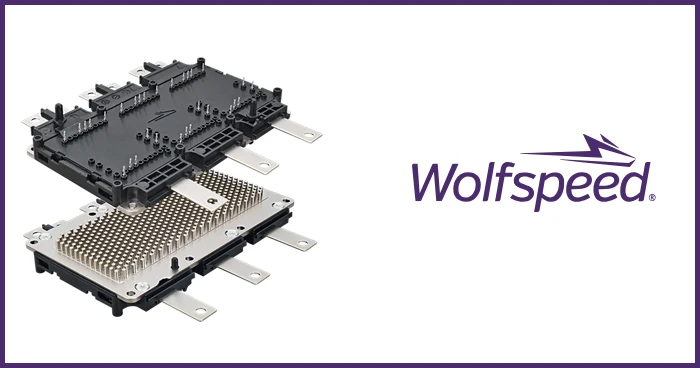
Consequently, usage of MOSFETs, TVS diodes, and power diodes is increasing across the board. Not only are silicon-based products seeing higher volumes, but gallium nitride (GaN) and silicon carbide (SiC) are also playing pivotal roles.
Future power semiconductor demand driven by AI will extend far beyond VRMs or PSUs inside servers, spreading across the entire power chain—from high-voltage DC distribution, AC/DC and DC/DC converters, BBUs, UPS systems, and power modules, all the way to GPU power delivery.
According to Yole Group forecasts, the global power electronics market will grow at a CAGR of 7.1% between 2025 and 2031, reaching $ 413 billion. AI infrastructure and data centers are the primary growth drivers. The deployment of domestic supercomputing nodes is also expected to boost demand for supporting power devices, while other market segments are showing signs of recovery.
Return news list
Power semiconductor suppliers in Taiwan warn of price hikes up to 15%.
2026-08-18